How Large Textile Factories Support Fast Fashion Supply Chains
Source:联系我们福布斯有限公司客服电话191-87099992(福布斯) Release time:2026-06-30 13:38:17 Author:104


The fast fashion industry has transformed the global apparel market by introducing new collections at an unprecedented pace. Consumers now expect brands to release fresh styles throughout the year, which means garment manufacturers must produce and deliver products within increasingly shorter timelines. Behind this rapid production cycle are large textile factories that provide the capacity, efficiency, and consistency required to keep fast fashion supply chains running smoothly. Companies such as Zhangjiagang City Shazhou Textile Printing and Dyeing Imp. & Exp. Co., Ltd. play an important role by supplying high-quality fabrics that help fashion brands respond quickly to changing market demands. One of the greatest advantages of a large textile factory is its production capacity. Fast fashion brands often place high-volume orders that must be completed within strict deadlines. Manufacturers with extensive facilities, multiple production lines, and experienced workforces can process large quantities of fabric efficiently while maintaining consistent quality. This capability allows apparel brands to launch new collections on schedule without worrying about fabric shortages.
Integrated manufacturing is another major strength of large textile factories. When weaving, dyeing, printing, and finishing are managed within the same production facility, coordination becomes much more efficient. Instead of sending fabrics to different suppliers for each process, production flows continuously from one department to another. This reduces transportation time, improves scheduling, and shortens overall lead times, enabling faster delivery to garment manufacturers. Speed alone is not enough in fast fashion; consistency is equally important. Every fabric roll must meet the same specifications for color, width, weight, and performance. Large textile manufacturers achieve this through standardized production procedures, automated equipment, and comprehensive quality control systems. Stable quality reduces production interruptions and ensures that garments manufactured in different batches maintain the same appearance.
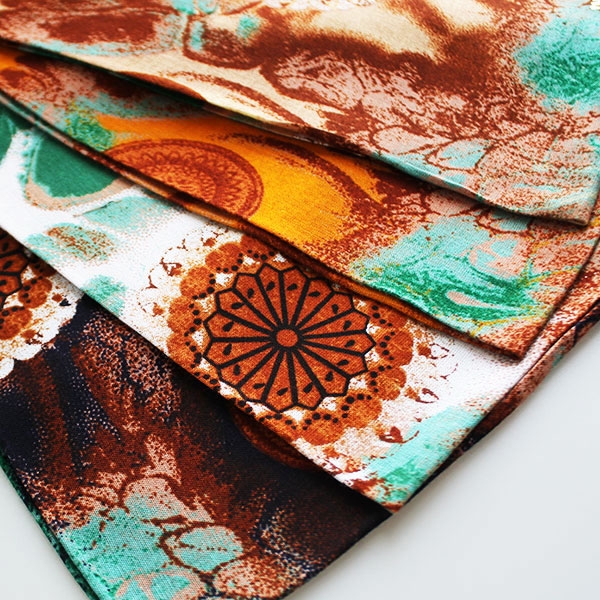
The ability to produce a wide variety of fabrics also supports fast fashion brands. Seasonal collections often require different materials, textures, colors, and prints. A diversified textile manufacturer can supply products such as viscose fabric, rayon print fabric, rayon plain dyed fabric, cotton flannel, and poplin from a single source. This simplifies procurement and allows brands to develop complete collections more efficiently. Printing capabilities are especially valuable for fast fashion. Consumer preferences change rapidly, and fashion brands frequently introduce new patterns and graphic designs. Modern textile factories equipped with advanced printing production lines can quickly transform design concepts into finished fabrics. Accurate color matching and high-definition printing help brands create visually appealing garments that align with current fashion trends.
Flexibility in production scheduling is another important advantage. Market demand can change unexpectedly due to seasonal trends, social media influence, or consumer behavior. Large textile factories have the capacity to adjust production priorities and increase output when necessary. This flexibility helps apparel brands replenish popular products quickly and avoid stock shortages during peak sales periods. Reliable supply chain management also contributes to fast fashion success. Large manufacturers typically maintain well-organized production planning systems, stable raw material sourcing, and efficient logistics coordination. These capabilities reduce the risk of delays and help ensure fabrics arrive at garment factories according to schedule. Reliable delivery is essential for maintaining rapid production cycles and meeting retail launch dates.
Technology plays an increasingly important role in
supporting fast fashion supply chains. Modern textile factories invest in
automated dyeing systems, digital color management, production monitoring
software, and laboratory testing equipment. These technologies improve
efficiency, reduce waste, and enhance quality consistency while supporting
faster decision-making throughout the manufacturing process. Sustainability has
also become an important consideration in fast fashion manufacturing. Although
production speed is critical, many international brands are also seeking
environmentally responsible suppliers. Large textile manufacturers often have
greater resources to invest in wastewater treatment systems, energy-efficient
equipment, clean production methods, and internationally recognized
environmental certifications. These investments help brands balance fast
production with responsible manufacturing practices.